
Alongside baccarat and roulette, the casino carries the games people in this region actually grew up playing — teen patti, andar bahar, ludo and rummy-style card games. They look familiar, which is exactly why they deserve a closer read: a game you have played at home for matchsticks behaves very differently once a house edge is attached to every hand.
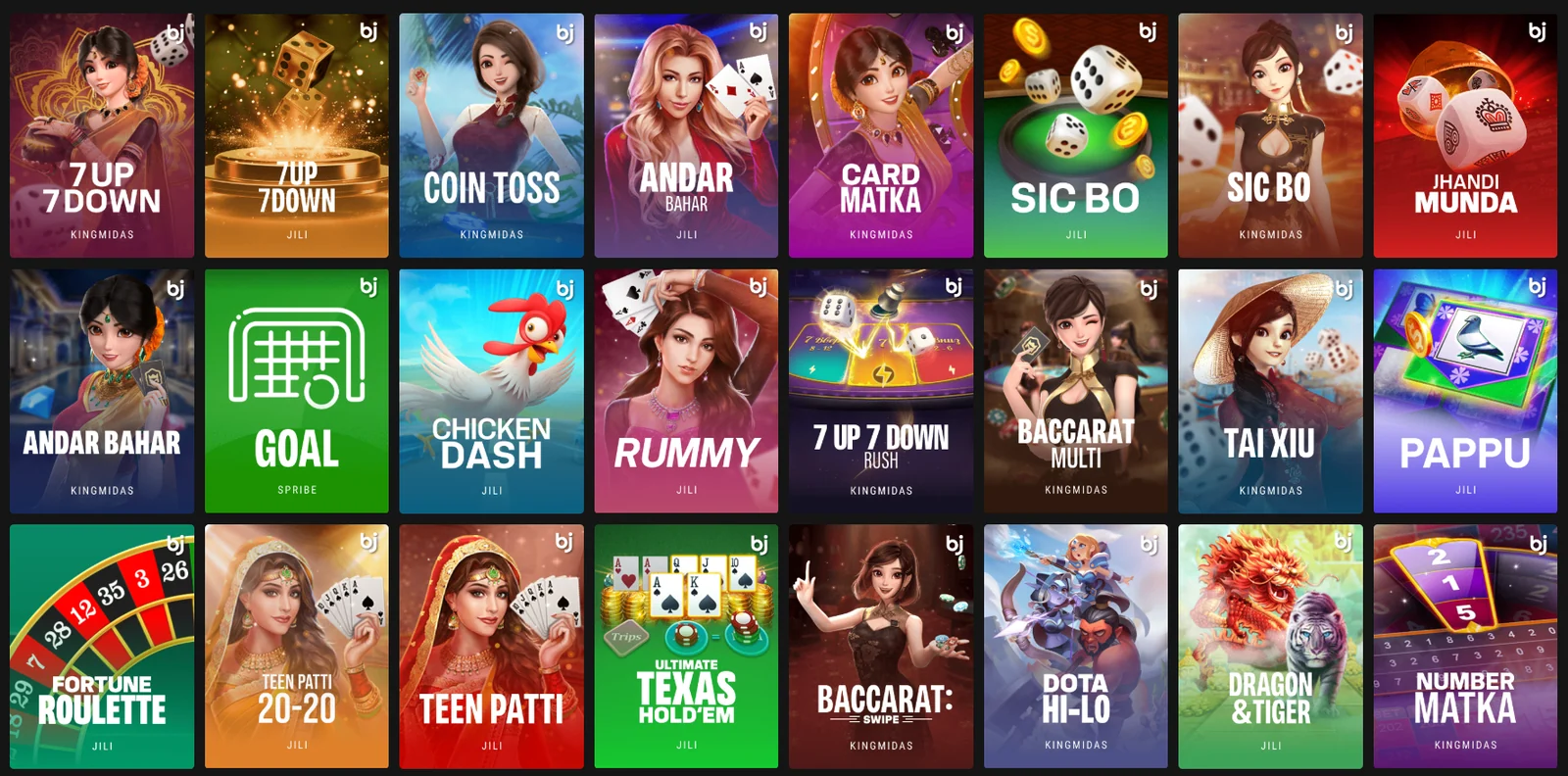
What is in the section
| Game | How it works | Typical house edge |
|---|---|---|
| Teen Patti | Three cards each, best hand wins; side bets on pairs and sequences | 2–4% on the main bet, far worse on side bets |
| Andar Bahar | One card is drawn, you back which side matches it first | Around 2.15% |
| 32 Cards, 7 Up 7 Down | Simple guessing games on card or dice totals | 2–4% |
| Ludo-style games | Dice-and-board play against other players or the house | Commission on the pot, or a built-in edge |
| Rummy-style card games | Player against player, house takes a rake | Rake on every hand played |
Two different money models sit in that table, and mixing them up is the most common misunderstanding here. Some games take an edge from every bet; others take a rake from a pot that players fund between themselves.
Ludo, and what changes when money is on it
A ludo baji game is the board game with a stake attached, and the change is bigger than it looks. At home the game is free and long; with money on it the house takes a cut of every match, so the expected outcome across many games is negative even against opponents of equal skill.
Three practical points about an online ludo baji match.
- The dice are generated, not thrown. Sequences that feel impossible are ordinary randomness, and a run of sixes for an opponent is not evidence of anything.
- Skill exists but is bounded. Choosing which token to move matters; the dice decide more. Against a strong opponent, skill narrows the gap rather than closing it.
- The rake compounds with volume. Ten short matches cost ten cuts, which is why quick-match formats are more expensive per hour than long ones.
A ludo online baji session runs on your ordinary account, and a ludo baji bd entry opens it with the Bangladesh interface. The regional label sets the language rather than the rules. A baji live ludo table with a live host adds presentation and slows the pace, which usually makes it cheaper per hour than the fast software version.
Teen Patti, and the side bets
The main bet in teen patti is one of the fairer things in the lobby. The side bets are not.
Pair Plus, bonus and jackpot side bets are priced with edges several times the main game’s, and they sit on the same screen looking equally reasonable. The pattern repeats across the whole section: the base bet is cheap, the decorated bet next to it is not.
Andar Bahar
Structurally the simplest game on the platform — a joker card is shown, then cards are dealt alternately to two sides until one matches. You back a side.
The edge comes from a small asymmetry in how the deal starts, and it is around two per cent, which puts it among the better bets available. Side bets on the number of cards dealt before a match are priced much worse. The base game is fast, though, so the cost per hour still climbs quickly if you play it at speed.
Pace, again, because it decides everything
| Game | Rounds per hour | At 20৳ a round |
|---|---|---|
| Software Andar Bahar | 200–300 | around 90–130৳ |
| Live Teen Patti | 40–60 | around 20–35৳ |
| Ludo, quick match format | Many short matches | Depends on the rake per match |
| Slot at 96%, for comparison | 400 | around 320৳ |
A low house edge played very fast costs more than a higher edge played slowly. That is the single most useful sentence about this section, and it is why the live versions of these games are usually the cheaper choice despite looking more serious.
Player-versus-player games
Where you play against other people rather than the house, the operator takes a rake and the rest is decided between players. That has one consequence worth stating plainly: your opponents may be considerably better than you, and the rake sits on top of that.
In a house game, the edge is fixed and known. In a rake game, the edge is the rake plus whatever skill gap exists at the table, and the second part is invisible before you sit down.
Bonuses and this section
Table and card games usually count 10 per cent towards wagering requirements, or nothing at all, while slots count 100 per cent. Taking a deposit bonus and then playing teen patti produces a requirement that barely moves and a withdrawal that cannot be approved.
If this section is where you play, declining the bonus is usually the better decision, because it leaves your own deposit free to withdraw whenever you want.
Practical habits
- Play the base bet, skip the side bets. This one rule saves more than any strategy in the section.
- If the same game runs with a dealer, that version costs less per hour. The dealer’s pace does the budgeting for you.
- Count matches, not stakes, in ludo. The rake applies per match.
- Do not read patterns into generated dice or cards. Each round is independent.
- Set the session length before starting. Familiar games are the easiest ones to keep playing.
These games are for adults aged 18 and over, and shutting an account down, or locking it for a while, is available on request.
Who supplies this section
Seven studios and more than a hundred titles, by the operator’s own count in September 2026: Kingmaker, JILI, BPoker, LudoBet, KA Gaming, WorldMatch and CQ9.
| Studio | What it brings |
|---|---|
| Kingmaker | The dice and wheel games — 7 Up 7 Down, Card Matka, Number Matka, Tai Xiu, sic bo, Thai Hi Lo, and a coin toss with a lightning multiplier that pays up to twenty times on the four-coin version |
| JILI | The card games most players come here for, andar bahar and teen patti |
| LudoBet | The board game, played for money against other people |
| BPoker | The player-versus-player room |
| KA Gaming, WorldMatch, CQ9 | The rest of the software tables |
The Kingmaker games are worth understanding as a group, because they share a shape: one decision, a resolution in a few seconds, and a lightning-style bonus that appears at random on one betting option and multiplies it. That structure is what makes them feel cheap per round and expensive per hour.
Frequently asked questions
Is a card game with real dealers fairer than a software one?
Both are audited, and neither has an advantage in fairness — what differs is verifiability. A live deal happens on camera, while a software deal comes from a generator you have to trust the audit for. The practical difference is pace: the software version deals several times faster, which costs more per hour at the same edge.
Can I make money at ludo if I am genuinely good?
Skill helps and the dice cap how much. Against weaker opponents a strong player wins more often than not, but the house takes a cut of every match, so the skill gap has to be wide enough to cover the rake before anything is left over. Most players overestimate their edge and underestimate how many matches the rake applies to.
Why do side bets exist if they are that bad?
Because they pay large multiples occasionally, and a large occasional payout is more memorable than a steady small drain. They are priced to be attractive rather than to be fair, and they are placed adjacent to the main bet for exactly that reason. Nothing on screen distinguishes a two per cent bet from a fifteen per cent one.
Do these games have lower limits than the main tables?
Usually yes, particularly the software versions, which is what makes them a reasonable place to learn a game’s rules before playing it anywhere with money that matters. Low minimums also make it easy to play far more rounds than intended, which is the trade.
Are the opponents in player-versus-player games real?
In a properly run rake game, yes — the operator profits from the rake rather than from the outcome, so it has no reason to seat anything else. That is worth checking is actually how a given game works, because some titles marketed as player-versus-player are house games with a social interface, and the money model tells you which one you are in.